Polybutylene plumbing was installed in millions of homes across the country between the late 1970s and mid-1990s, and Central Florida has its share of homes still running on it today. If your Orlando home was built roughly between 1978 and 1995, there is a real possibility that some or all of your water supply lines are polybutylene, even if a previous owner never mentioned it.
Identifying polybutylene pipe is not difficult once you know what to look for. Here is how to check your own home before deciding whether it is something worth addressing.
Why Polybutylene Matters
Polybutylene, often called poly pipe or PB pipe, was popular for decades because it was inexpensive and fast to install. Over time, it became clear that the material degrades from the inside when exposed to chlorine and other chemicals commonly found in municipal water supplies, leading to a well-documented pattern of unpredictable failures.
- Unlike a slow leak that gives you warning, polybutylene tends to fail suddenly, sometimes without any prior sign of trouble.
- Because the degradation happens from the inside of the pipe, visual inspection alone cannot always tell you how much life a section has left.
- Many insurance companies now ask directly about polybutylene plumbing on Florida homeowners policies, and some limit or decline coverage for homes that still have it.
What Polybutylene Pipe Looks Like
Polybutylene pipe has a distinctive appearance that is usually easy to distinguish from copper, PEX, or CPVC once you know the signs.
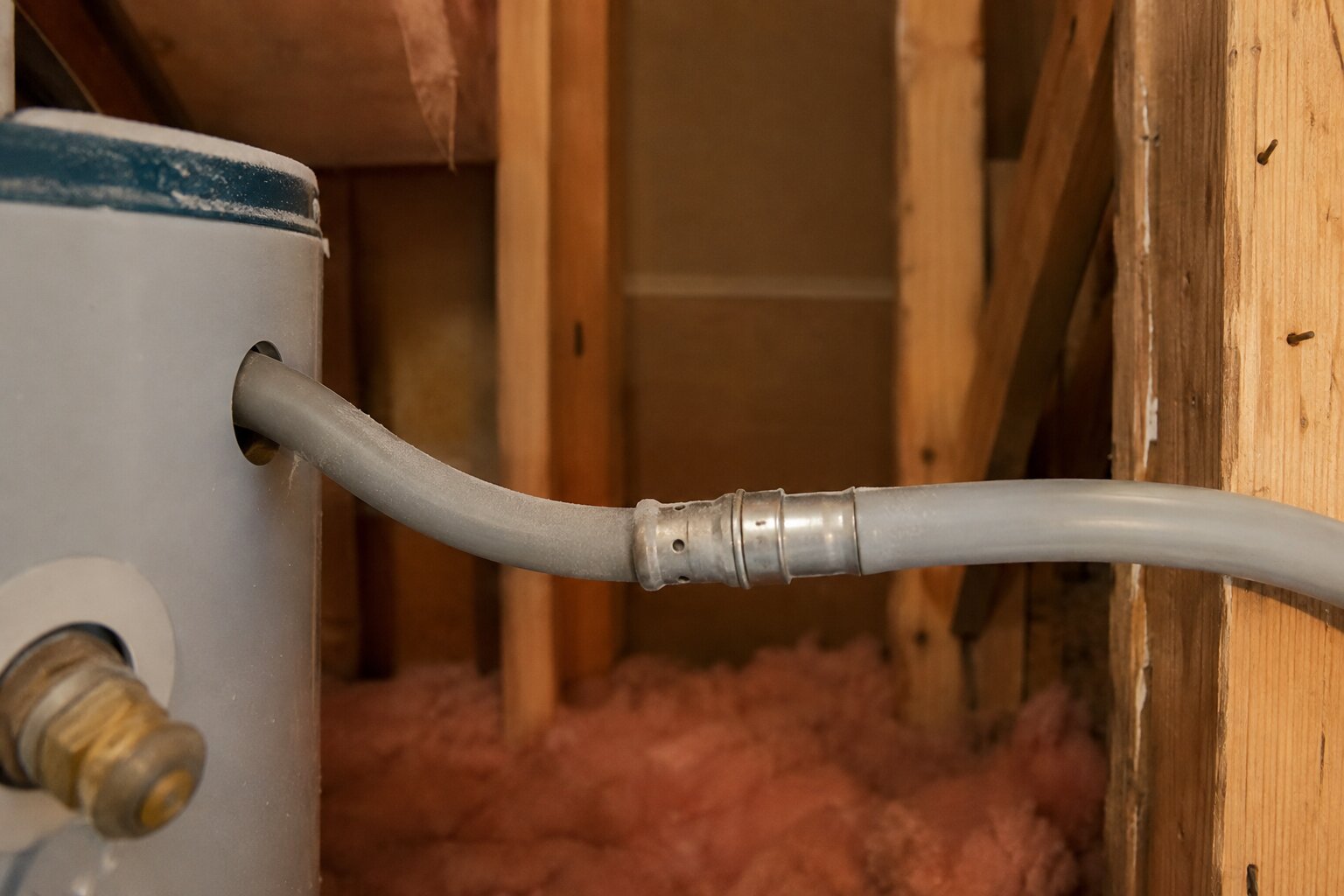
- The pipe itself is flexible plastic tubing, typically gray, but sometimes found in blue or black depending on the application and installation era.
- Many sections are stamped with a printed code along the length of the pipe, often including the marking PB2110.
- Fittings are usually metal or plastic crimp-style connections, secured with a metal crimp ring rather than glued or soldered joints.
Where to Look in Your Home
Polybutylene shows up in a handful of predictable locations, which makes a self-inspection manageable even without plumbing experience.
The Water Heater Closet
The water heater area is one of the most reliable places to check, since supply lines are usually visible entering and exiting the unit without needing to cut into a wall.
- Look at the pipes running directly into the top of the water heater.
- Check for the gray or blue flexible tubing and crimp-style fittings described above.
The Attic
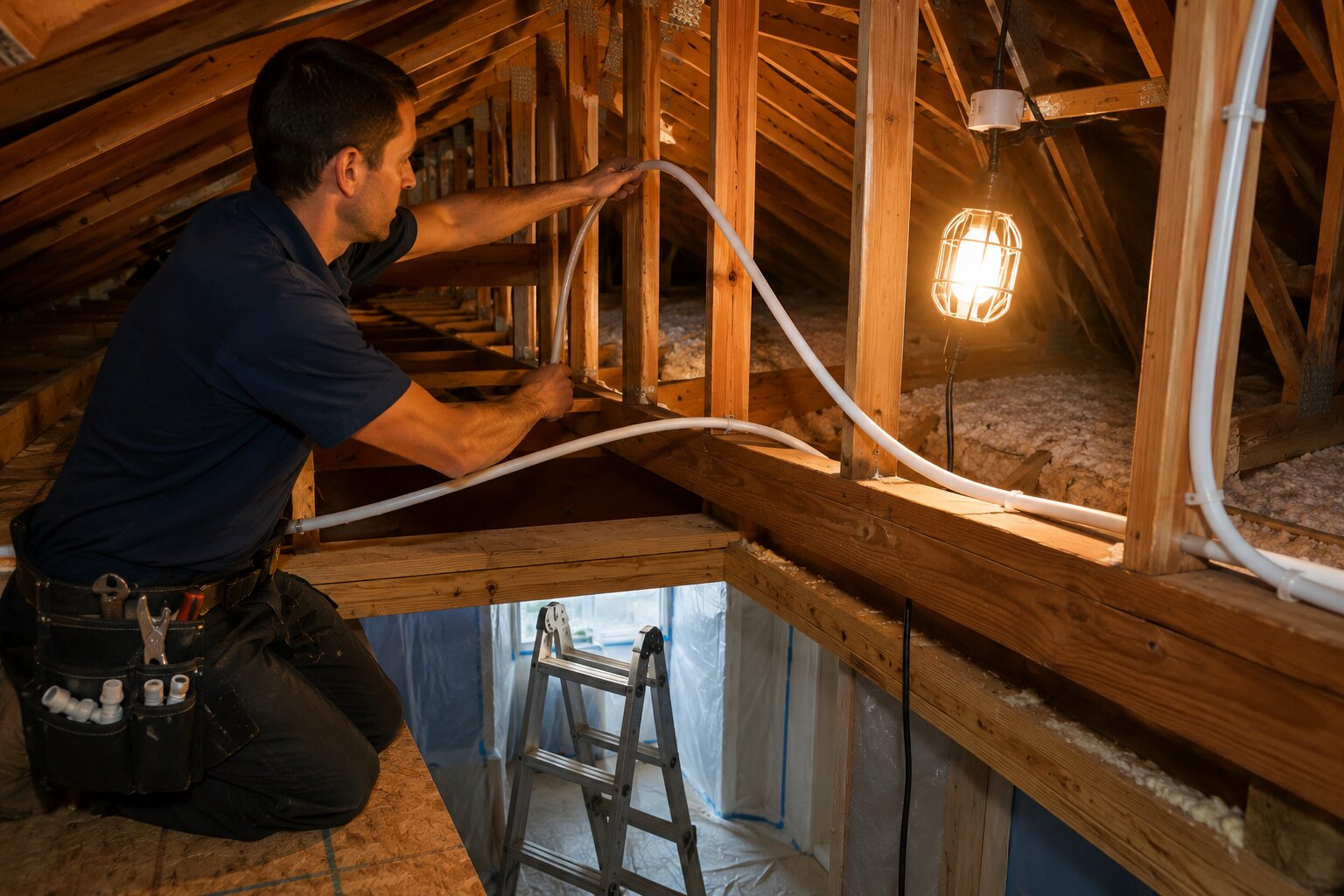
Homes with attic-run plumbing often have long, visible sections of supply line that are easy to inspect.
- Look along the main runs feeding bathrooms and other fixtures.
- Poly pipe in an attic is often still gray or blue and may show some fading from heat exposure over the years.
Under Sinks
The supply lines feeding sinks in kitchens and bathrooms are another easy, accessible check.
- Look at the small diameter lines connecting to the shutoff valves beneath a sink.
- Note that some homes were only partially converted over the years, so it is possible to find PEX or copper under one sink and polybutylene under another.
The Main Water Entry Point
Where the main water line enters the home, often near the water heater or in a utility area, is another common place to spot polybutylene before it branches out to the rest of the house.
Confirming Your Home's Build Year
If you are not sure when your home was built, or want to confirm it falls in the higher-risk window, the Orange County Property Appraiser's website allows you to look up a property by address and see its official year built. Homes built between roughly 1978 and 1995 carry the highest likelihood of polybutylene plumbing, though the exact years of common use varied somewhat by builder and region.
What to Do If You Find Polybutylene
Finding polybutylene pipe in your home does not necessarily mean immediate failure is coming, but it does mean the plumbing is operating on borrowed time relative to modern materials.
- A licensed plumber can confirm the extent of polybutylene piping throughout your home, since it is common for only certain sections to have been replaced over the years.
- Homeowners often choose to plan a full repipe proactively, rather than waiting for a failure that can cause significant water damage with little warning.
- If you are shopping for homeowners insurance or renewing an existing policy, confirming your pipe material ahead of time can help you understand what coverage questions to expect.
Getting a Clear Answer for Your Orlando Home
If your home falls in the build-year range where polybutylene was common, a short inspection is worth the time it takes. A licensed plumber can confirm what material is actually running through your walls, attic, and under your fixtures, and help you understand what a repipe would involve if your home needs one.