Your water meter is one of the most reliable tools you have for confirming a hidden leak, and it does not require any special equipment to read. Whether your service comes from OUC or Orange County Utilities, the meter face works the same basic way, and a simple test can tell you within thirty minutes whether water is escaping somewhere on your property.
Here is how to read the meter, run the test properly, and use your billing history to help date how long the leak has likely been active.
Locating and Reading Your Water Meter
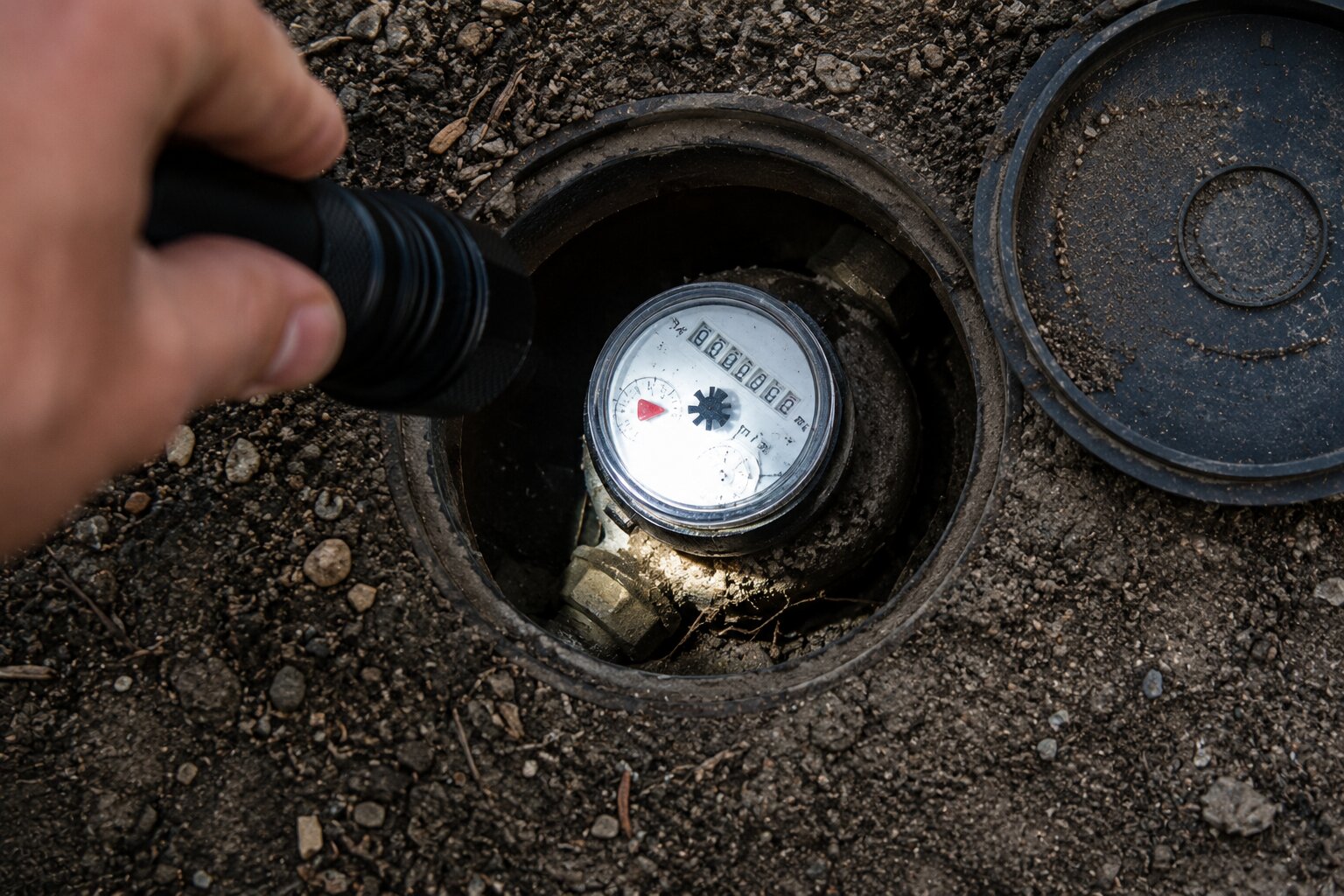
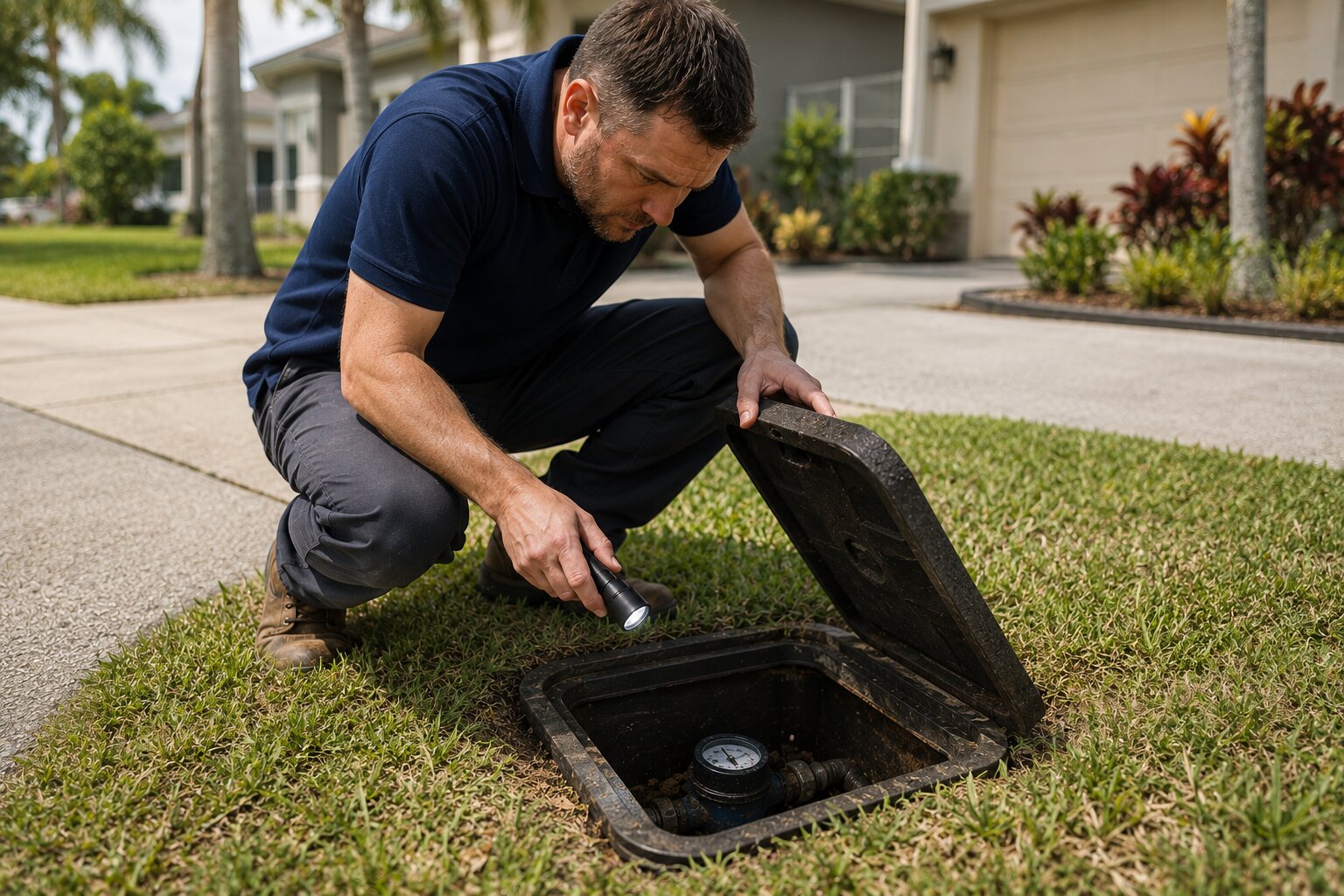
Most Central Florida water meters sit in an in-ground box near the street or property line, with a lid you can lift using a flathead screwdriver or meter key.
- Inside the box, you will see a round meter face with a digital or dial readout showing total water usage.
- Look closely at the meter face for a small triangular, star-shaped, or circular indicator, often red or black, positioned separately from the main usage numbers. This is the leak indicator.
- The leak indicator spins whenever any amount of water is flowing through the line, even a very small amount, making it far more sensitive than watching the main usage numbers alone.
What the Leak Indicator Tells You
The leak indicator is designed specifically to catch small, continuous flows that would otherwise be easy to miss.
- If the leak indicator is spinning while every fixture and appliance in your home is confirmed off, water is actively flowing somewhere on your side of the meter.
- A fast-spinning indicator suggests a larger, more active leak, while a slow, intermittent spin can still indicate a smaller but ongoing leak worth investigating.
- A completely still indicator, with no water use anywhere in the home, means no leak is currently active.
Running the Two-Reading Test
This test confirms a leak with a level of certainty a quick glance cannot provide.
- Make sure no water is being used anywhere on the property. Turn off all faucets, pause any appliances using water, and confirm no toilet is running.
- Take a clear photo or written note of the meter's current reading, including the leak indicator's position.
- Wait 30 minutes without using any water anywhere in the home or yard.
- Check the meter again. If the reading has changed at all, or if the leak indicator has moved, water has flowed during that window with nothing intentionally using it.
Photographing the Meter Properly
- Take a straight-on photo of the full meter face, including both the usage numbers and the leak indicator, in good lighting.
- Include a timestamp or note the time separately, since most phone cameras embed this automatically.
- Taking a matching photo for both readings makes the comparison clear and gives you documentation if you need to discuss the issue with your utility or a plumber later.
Isolating the Source Once a Leak Is Confirmed
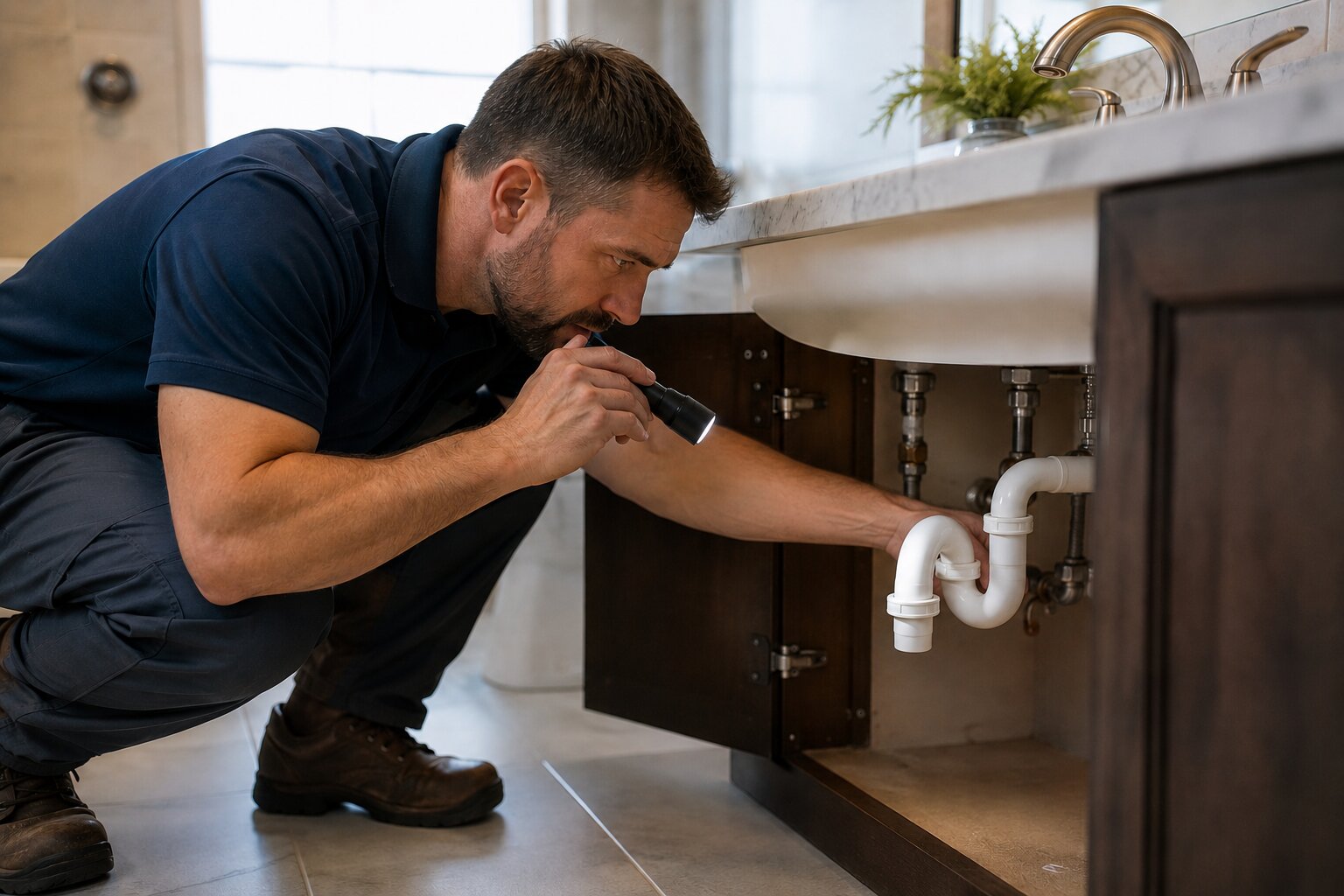
- Locate your irrigation system's shut-off valve and close it, then recheck the meter. If the indicator stops, the leak is very likely in the irrigation line.
- If irrigation is not the source, locate your main shut-off valve where the line enters the house and close it, then recheck the meter again.
- If the indicator stops once the main valve is closed, the leak is between the meter and your home's plumbing. If it continues even with the main valve closed, the issue may be on the utility side of the meter and worth reporting directly.
Using Your Water Bill to Date the Leak
Your utility bill's consumption history can help estimate roughly when a leak started, which matters more than most homeowners realize.
- Compare your last several months of usage on your OUC or Orange County Utilities bill, looking for a noticeable jump that does not match a change in household habits.
- A sudden increase that has continued steadily since a specific billing period often lines up closely with when a leak began.
- This information can be useful when discussing a leak adjustment request with your utility, and also helps a plumber understand whether they are dealing with a longstanding slow leak or a more recent failure.
Insurance and Utility Leak Adjustments
- Many utilities, including OUC and Orange County Utilities, offer a one-time leak adjustment credit for documented hidden leaks that have been repaired, which can meaningfully offset an inflated bill.
- Keeping your meter photos, repair invoice, and consumption history together makes this process considerably smoother.
- Homeowners insurance policies vary in how they treat gradual leaks versus sudden ones, so documentation showing when the leak likely started can also matter for a claim.
Getting a Confirmed Leak Repaired
Once you have confirmed a leak using the meter test and narrowed down whether it is in the irrigation system or your home's own plumbing, a licensed plumber can pinpoint the exact location using proper leak detection equipment and get it repaired. Acting quickly limits both the water damage risk and the size of your next bill.