Central Florida homeowners do not think about freezing pipes the way homeowners further north do, and most winters that is a reasonable assumption. But Orlando typically sees at least a handful of hard freezes each January, and because homes here are not built with the same freeze protection as colder climates, even a short cold snap can cause real damage.
The good news is that protecting your home takes very little time once you know what to check. Here is what to cover before the next freeze warning goes out.
Why Orlando Homes Are More Vulnerable Than You Would Expect
Homes built for a warm climate often run plumbing lines in places that would never be exposed to freezing temperatures further north, including attics and exterior walls with minimal insulation.
- Pipe materials and installation methods here are chosen for Florida's typical climate, not repeated freeze cycles.
- A single hard freeze, even for just a few hours overnight, can be enough to burst an exposed line that has never had to handle those temperatures.
- Because freezes are infrequent, many homeowners simply forget to prepare until a freeze warning is already in the forecast.
Protecting Hose Bibs
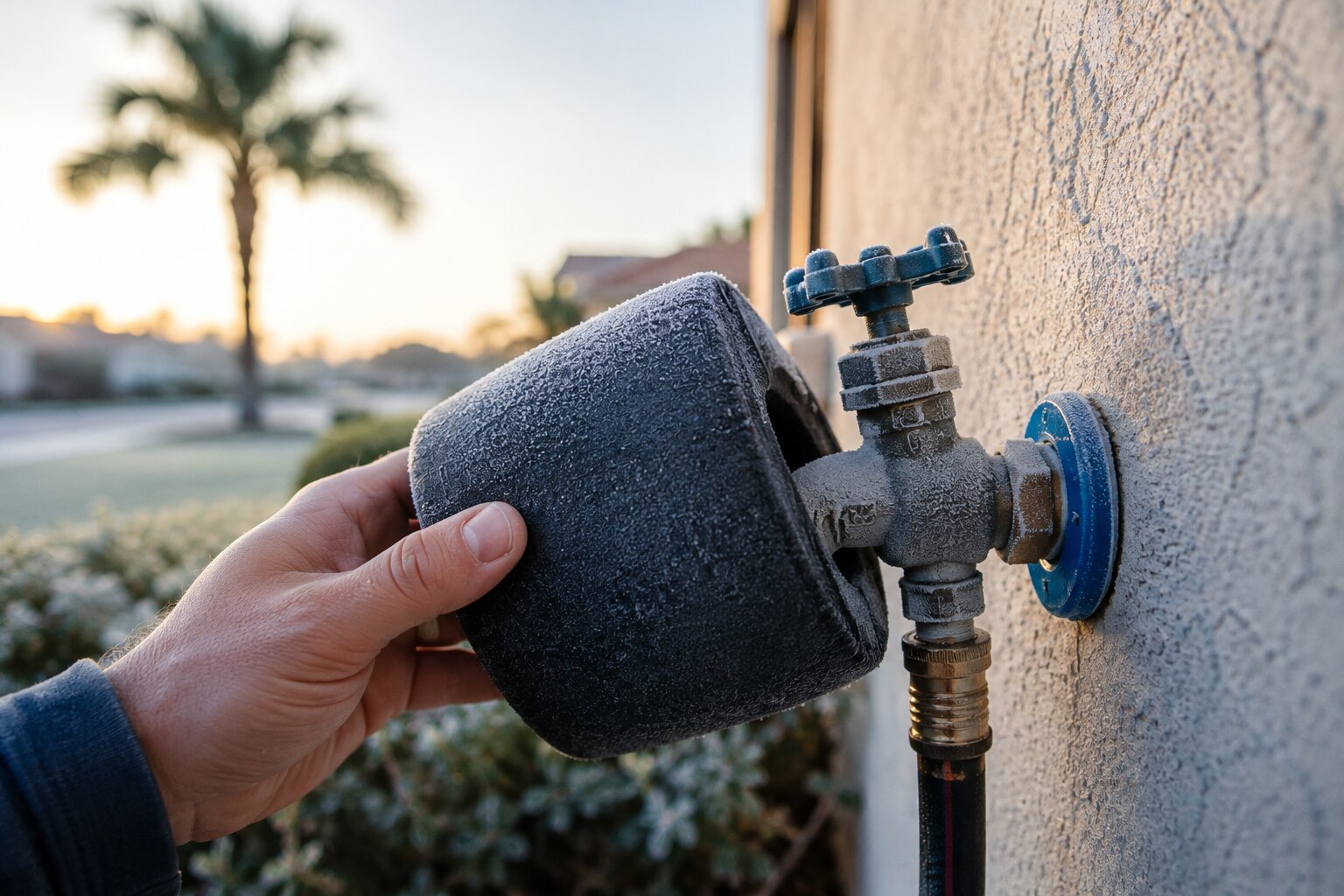
Exterior hose bibs are one of the most commonly affected fixtures during a Central Florida freeze, since they sit directly exposed to outside air.
- Disconnect and drain garden hoses before a freeze, since a connected hose can trap water against the bib and increase the chance of a freeze-related crack.
- Use an inexpensive foam hose bib cover, which slips over the spigot and provides a meaningful layer of insulation for a few hours of cold.
- If a hose bib has its own interior shutoff valve, closing it and draining the exterior line offers additional protection during an extended cold snap.
Protecting Exposed Attic Pipes
Attic-run plumbing is common in Central Florida construction, and attics offer very little insulation against sudden overnight temperature drops.
- CPVC and PEX lines running through an attic are more vulnerable near exterior walls, soffits, or areas with gaps in insulation.
- Wrapping exposed sections with pipe insulation sleeves ahead of freeze season is a one-time task that pays off during every subsequent cold snap.
- Sealing obvious attic air leaks, such as gaps around vents or recessed lighting, helps keep the surrounding air warmer overnight.
Protecting Irrigation Backflow Assemblies
The backflow preventer on an irrigation system is often mounted above ground and fully exposed, making it one of the more freeze-prone components on a property.
- Foam or fabric backflow insulation covers are inexpensive and specifically designed to fit over these assemblies.
- Avoid wrapping the assembly in plastic bags or materials that trap moisture against the components, since that can make freeze damage worse rather than better.
- If a hard freeze is forecast overnight, running irrigation earlier in the evening rather than during the coldest early morning hours can reduce standing water in exposed components.
Protecting Pool Equipment
Pool pumps, filters, and exposed plumbing lines are common casualties during Central Florida freezes, since this equipment is built and installed for a warm-weather climate.
- Running the pool pump continuously during a hard freeze keeps water moving through the system, which significantly reduces the risk of a freeze crack in the equipment or plumbing.
- Covering exposed above-ground equipment and plumbing with towels or specifically designed freeze covers adds another layer of protection.
- If your pool equipment has a freeze sensor or auto-run freeze protection setting, confirm it is functioning correctly before cold weather arrives rather than discovering a problem during the freeze itself.
The Drip-the-Faucet Debate
Letting an indoor faucet drip during a freeze is common advice in colder climates, but it deserves a more specific answer for Central Florida homes.
- A slow drip keeps water moving through a pipe, which makes it more resistant to freezing at any single point along the line.
- This is most useful for homes with exposed or vulnerable plumbing runs, such as attic lines near exterior walls, rather than a blanket recommendation for every fixture in the house.
- For most Central Florida homes with primarily interior plumbing, the bigger priority is protecting hose bibs, irrigation backflow, and pool equipment rather than dripping every indoor faucet.
Preparing Before the Next Freeze Warning
Central Florida's freezes are infrequent enough that it is easy to forget preparation until a cold snap is already in the forecast. Taking an hour to cover hose bibs, insulate exposed attic pipe sections, protect the irrigation backflow assembly, and confirm pool equipment is ready can prevent a costly repair. If a freeze has already caused a leak or damage in your home, a licensed plumber can assess and repair the affected plumbing quickly so the rest of the season goes smoothly.